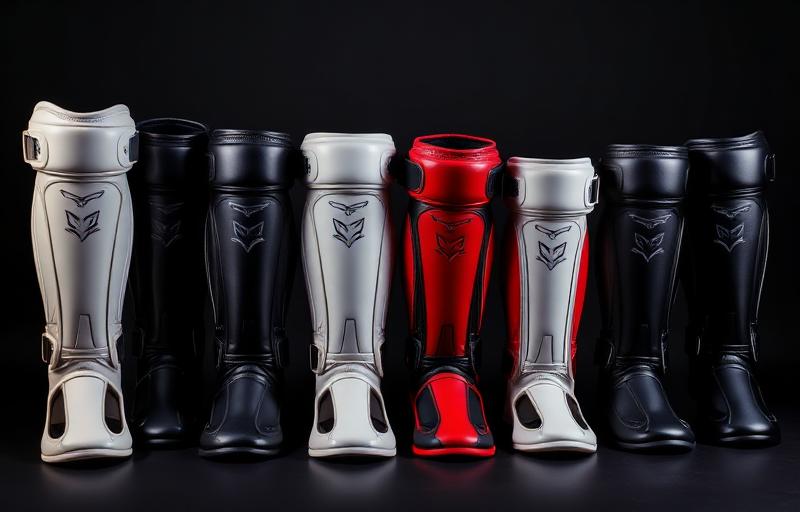
Best Shin Guards for Muay Thai in 2026: Complete Buyer's Guide
Shin guards might be the most underappreciated piece of Muay Thai equipment. A bad pair can leave you with bruised shins, limited mobility, and a reluctance to check kicks — which defeats the purpose of sparring. After testing over a dozen pairs through hundreds of rounds, here are our picks for 2026.
Why Shin Guard Quality Matters
Unlike boxing gloves, which primarily protect your hands, shin guards serve a dual purpose: they protect your shins when you kick and protect your training partner when they check your kicks. A shin guard with poor padding doesn't just hurt you — it hurts everyone you train with.
The wrong shin guard also affects your technique. Too heavy and your kicks slow down. Too bulky and they restrict your knee movement. Too loose and they slide during exchanges, creating gaps where impact lands directly on bone.
Types of Shin Guards
Strap-on (sock-style): Slide on like a sleeve and secure with velcro straps. These are the most common for Muay Thai training. They offer good mobility, decent protection, and easy on/off. Best for: most training situations.
Lace-up: Traditional Thai-style guards that lace up the back of the calf. They provide the most secure fit and are preferred by many Thai fighters. Downsides: slower to put on and harder to adjust mid-session. Best for: committed Muay Thai practitioners who value authenticity and fit.
Instep-only: Minimal guards that cover just the shin bone and top of the foot. Used in competition and light technical sparring. Not suitable for hard sparring. Best for: competition preparation and experienced fighters.
Best Overall: Rage Shin Guards
Our Rage shin guards use a multi-layer foam system with a hard outer shell that distributes impact across the entire surface. The anatomically curved design follows the natural shape of the shin, eliminating the gaps that cause guards to rotate on impact.
What stands out: The triple-strap system (calf, below-knee, and ankle) keeps them locked in place even during heavy exchanges. The instep padding protects the top of your foot for roundhouse kicks without restricting ankle flexibility. Ventilation holes along the back prevent sweat buildup.
Best for: All-around Muay Thai training and sparring.
What to Look For
Padding density: Press your thumb firmly into the shin area. You shouldn't be able to feel the hard inner shell easily. The foam should spring back within a second — if it stays compressed, it's too soft and won't protect you during hard exchanges.
Shin coverage: The guard should cover from just below the knee to the ankle. Too short and your lower shin is exposed. Too long and it interferes with knee movement.
Instep protection: For Muay Thai, instep coverage is essential. Your foot takes impact on roundhouse kicks and can break without protection. The instep padding should cover the top of your foot without restricting your toes (you need to grip the mat).
Weight: Heavier guards (400g+) offer more protection but slow your kicks. Lighter guards (under 300g) feel faster but may not withstand heavy sparring. Most quality training guards fall in the 300-400g range per guard.
Closure system: Velcro straps should be wide (at least 1.5 inches), and there should be a minimum of two straps. Elastic-only closures stretch over time and lose their grip.
Sizing Guide
Shin guard sizing typically follows height or shin length:
- Small: Under 5'6" / shin length under 14"
- Medium: 5'6" – 5'10" / shin length 14"–16"
- Large: 5'10" – 6'2" / shin length 16"–18"
- XL: Over 6'2" / shin length over 18"
Measure from just below your knee cap to the top of your ankle bone. If you're between sizes, size up — a slightly larger guard with good straps will protect better than a too-small guard with gaps.
Breaking In New Shin Guards
New shin guards are stiff. Don't go straight to hard sparring — start with bag work and light drilling for the first week. The foam and shell will conform to your leg shape and become more comfortable over 5-10 sessions. You can speed up the break-in by gently bending the guard along its natural curve (like breaking in a baseball glove).
Maintenance Tips
Shin guards absorb more sweat than almost any other piece of gear. After every session:
- Wipe the interior with an antibacterial wipe or spray
- Air dry completely before storing — never seal them in a gym bag wet
- Spray with a gear deodorizer weekly
- Replace when the foam no longer springs back or the shell cracks
Stay in the Ring
Get training tips, gear guides, and exclusive deals straight to your inbox.