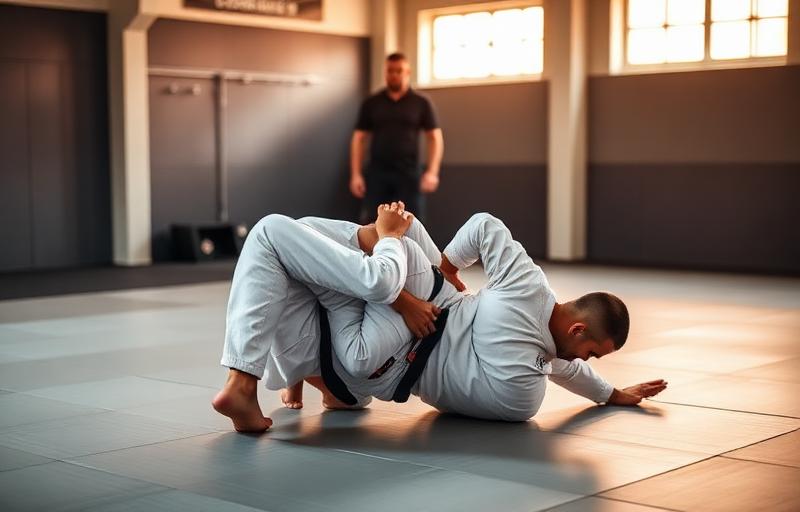
Side Control Escapes: How to Get Out of the Worst Position in BJJ
Side control is arguably the worst position to be in BJJ — worse than mount in many ways. In mount, you can at least bridge. In side control, your opponent's weight is distributed across your torso, your hips are pinned, and you have limited bridging leverage. Escaping requires frames, timing, and hip movement. Here are the four fundamental escapes.
Defensive Priority: Frames First
Before any escape attempt, establish your frames. Without frames, you'll be flattened, crossfaced, and submitted.
- Near-side frame: Your forearm across your opponent's neck/collarbone (the "crossface frame"). This prevents them from driving their chest into your face.
- Far-side frame: Your other hand on their hip. This prevents them from advancing to mount or knee-on-belly.
- Do NOT reach over their back. Reaching over exposes your arm for kimuras and armbars. Keep your elbows tight and your arms on the near side of their body.
Escape 1: Shrimp to Guard (The Standard)
The most fundamental side control escape. You create space with frames and hip escapes, then re-insert your legs to recover guard.
- Establish frames: Forearm on their neck, hand on their hip.
- Bridge slightly: Not a full bridge — just enough to create a sliver of space between your hip and the mat.
- Shrimp away: Hip escape away from your opponent, sliding your bottom hip out from under their chest.
- Insert the knee: As space opens, slide your near-side knee in between your body and theirs. Point your knee toward their chest.
- Recover guard: Use the inserted knee as a frame to push them back, then bring your other leg in and close your guard.
Key detail: Multiple small shrimps beat one big shrimp. Each shrimp creates a few inches of space. Two or three in sequence with knee insertions between each is the most reliable method.
Escape 2: Underhook Escape to Knees
Instead of recovering guard, this escape gets you to your knees in a wrestling-style position.
- Get on your side: From the framing position, turn toward your opponent so you're on your side, not flat on your back. Being flat makes you heavy and immobile.
- Dig the underhook: Shoot your bottom arm under their far armpit to establish an underhook. The underhook is the key — whoever has it controls the position.
- Come to your knees: Use the underhook to drive into your opponent while bringing your knees underneath you. You're essentially wrestling up from bottom.
- Establish position: From your knees with the underhook, you can take the back, initiate a single-leg, or work for a reversal.
When to use it: Against opponents who are too heavy to move with shrimping. The underhook escape uses your opponent's weight against them — you're going to them, not pushing them away.
Escape 3: Ghost Escape (Elbow Push)
A sneaky escape that works when your opponent's weight is high on your chest.
- Frame on their far-side shoulder with your near-side hand.
- Push their shoulder while simultaneously shrimping your hips in the opposite direction (toward their legs).
- As you create space, slide your body out headfirst (your head goes toward where their feet are).
- Turn and face them, establishing guard or coming to a neutral position.
Why it works: Most side control pressure comes from the chest and hips driving into you. The ghost escape moves you in the direction they're NOT expecting — toward their legs instead of away from them.
Escape 4: Bridge and Roll
Similar to the mount trap-and-roll, this works when your opponent is controlling your head tightly (crossface position).
- Hook your far-side foot over their near-side leg.
- Reach over their back with your far-side arm (this is the one time reaching over is acceptable — because you're committing to the roll).
- Bridge explosively toward them and roll over their body.
- You should end in their guard or in a scramble.
When to use it: When your opponent is very tight and not giving you space to shrimp. The bridge-and-roll works best against opponents who are committed to holding you down with upper body pressure.
Chaining Escapes
No single escape works every time. The real skill is chaining them together:
- Attempt the shrimp → opponent blocks by driving forward → switch to underhook escape (their forward pressure helps you get to your knees)
- Attempt the underhook escape → opponent whizzer to block → switch to ghost escape while they're focused on your underhook
- Attempt the bridge-and-roll → opponent posts to prevent → space opens for shrimp escape
Every failed escape creates a reaction, and every reaction creates an opening for the next escape. This is how high-level grapplers escape dominant positions — not with one explosive move, but with a chain of attempts that eventually finds an opening.
Stay in the Ring
Get training tips, gear guides, and exclusive deals straight to your inbox.