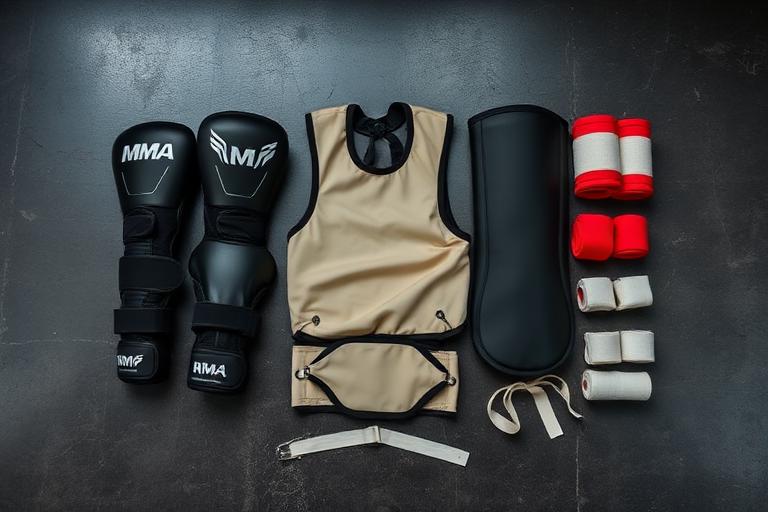
Complete MMA Beginner's Gear Checklist: Everything You Need to Start Training
MMA is the most gear-intensive combat sport because it combines striking and grappling disciplines that each have their own equipment requirements. The good news is that you don't need everything on day one. This guide prioritises your purchases so you can start training immediately and add gear as you progress.
Day One: The Absolute Essentials
MMA Gloves or Boxing Gloves
Most MMA gyms use 16oz boxing gloves for striking classes and 4oz-7oz MMA gloves for MMA-specific training. Start with boxing gloves — you'll use them more frequently in the first few months. MMA gloves can wait until you're doing regular MMA sparring.
If you can only buy one pair, get 16oz boxing gloves. They work for pads, bags, and sparring across all striking disciplines.
Hand Wraps
180-inch semi-elastic wraps protect your knuckles and wrists inside the gloves. They're essential for every striking session. Buy 2-3 pairs so you always have a clean set.
Mouthguard
Mandatory for any class involving partner work. A boil-and-bite guard is the minimum; custom-fitted from a dentist is better. Wear it for striking drills, wrestling, and rolling — not just sparring.
Rash Guard
Compression-fit rash guards are required for grappling classes. They prevent mat burn, reduce infection risk, and wick moisture. Long sleeve offers the most protection. You need at least 2-3 for a training week.
Fight Shorts
MMA shorts need to work for both striking and grappling. No pockets, no zippers, no Velcro — anything that can scratch a partner or catch on a finger is banned. Look for 4-way stretch fabric with a short inseam that allows full kicking range.
First Month: Filling the Gaps
Shin Guards
Once you start kickboxing or Muay Thai classes within your MMA program, shin guards become essential. Full shin-and-instep coverage is the standard. Strap-on models with Velcro closures are the most versatile for MMA because they're easy to remove between striking and grappling rounds.
Groin Protector
Body kicks, accidental knees during wrestling, and ground-and-pound positions all put the groin at risk. A steel cup in compression shorts is the safest option. Mandatory for sparring at most gyms.
Spats or Compression Tights
Worn under fight shorts for grappling, spats provide additional mat burn protection and muscle support. They also prevent thigh-to-thigh skin contact during guard work, reducing infection risk.
When You Start Sparring
MMA Sparring Gloves (7oz)
Heavier than competition gloves (4oz) but lighter than boxing gloves, 7oz MMA sparring gloves have open fingers for grappling transitions while providing enough padding for controlled striking. These are specific to MMA sparring — don't use them for bag work.
Headgear
Full-face headgear with cheek guards is the safest option for MMA sparring. The striking comes from all angles (including elbows and knees), so you need more coverage than boxing headgear provides.
Wrestling Shoes (Optional)
Some MMA gyms allow wrestling shoes for takedown drills. They provide ankle support and traction on the mat. Not essential for most beginners, but useful if wrestling becomes a focus of your training.
Budget Breakdown
- Day one: Boxing gloves ($60-120) + wraps ($10-15) + mouthguard ($10-20) + rash guard ($30-60) + fight shorts ($30-50) = $140-265
- First month: Shin guards ($50-100) + groin protector ($20-40) + spats ($25-40) = $95-180
- Sparring: MMA gloves ($40-80) + headgear ($50-90) = $90-170
Total for first 3 months: $325-615. Start with the essentials and add as your training demands.
What You Don't Need Yet
Skip these until you're training seriously or competing:
- Competition gloves (4oz): Only needed for fights, not training.
- Body protector/belly pad: Useful for coaching, not for students.
- Multiple gi sets: Unless your MMA program has a dedicated gi BJJ class, you won't need a gi for MMA training.
- Fancy branded gear: Performance matters more than labels at every level. A $60 pair of gloves from a quality brand protects your hands just as well as a $200 designer pair.
Stay in the Ring
Get training tips, gear guides, and exclusive deals straight to your inbox.