Gi vs No-Gi BJJ: Which Style Should You Train?
Walk into any BJJ academy and you'll find two camps: gi loyalists who believe the kimono is the soul of jiu-jitsu, and no-gi enthusiasts who see it as an unnecessary relic. The truth? Both styles develop world-class grapplers, but they do it in fundamentally different ways. This guide breaks down the real differences so you can decide where to invest your mat time.
What's the Actual Difference?
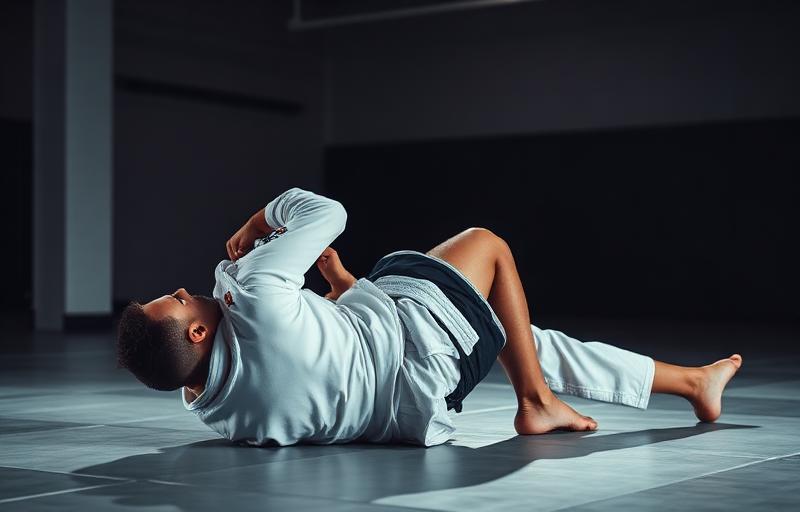
Gi BJJ is practiced in a traditional cotton kimono (jacket, pants, and belt). The gi provides dozens of grip points — collars, sleeves, lapels, pants — that create an entirely unique grappling dynamic. You can choke someone with their own collar, control distance with sleeve grips, and slow down explosive athletes with strategic friction.
No-gi BJJ is practiced in a rash guard and shorts (or spats). Without fabric to grab, the game shifts to underhooks, overhooks, wrist control, and body locks. The pace is faster, scrambles are more frequent, and athleticism plays a bigger role. No-gi is sometimes called "submission grappling" or "submission wrestling."
Technique Differences
The gripping system changes everything. In the gi, a spider guard player can control both arms using sleeve grips and create sweeps that are physically impossible without fabric. Collar chokes — cross choke, loop choke, baseball bat choke, bow and arrow — represent an entire submission family that only exists in gi training.
No-gi replaces these with body-lock passing, leg lock systems (heel hooks, knee bars, toe holds), and wrestling-based entries. The guillotine, darce, and anaconda chokes are more effective without a gi because there's less friction to slow the squeeze. Leg locks have historically been more developed in no-gi, though modern gi competitions are catching up.
Guard play differs significantly too. In the gi, you can play lasso guard, worm guard, and collar-sleeve guard — all grip-dependent. No-gi favors butterfly guard, single-leg X, and ashi garami (leg entanglement) positions.
Rules & Competition
IBJJF (the largest gi organization) has the most restrictions: no heel hooks below brown belt, no reaping, no slamming, and limited leg lock entries. Points are awarded for sweeps, passes, mount, and back control.
ADCC (the premier no-gi event) uses a more permissive ruleset. Heel hooks are legal for all competitors, and the scoring system penalizes passivity — you can receive negative points for pulling guard without an attack. This creates a more aggressive, finish-oriented style.
New organizations like Who's Number One, Polaris, and Combat Jiu-Jitsu are blurring the lines with submission-only formats and unique rulesets (CJJ allows open-palm strikes on the ground).
Which Builds Better Fundamentals?
This is where the debate gets heated. Gi advocates argue that the slower pace teaches patience, precision, and defensive awareness. When someone has 47 ways to grip you, you learn to be methodical about your escapes. Many legendary grapplers — Roger Gracie, Buchecha, Gordon Ryan in his early development — built their foundation in the gi.
No-gi advocates counter that the gi creates false security. You can stall by grabbing fabric, hide bad positioning behind collar grips, and develop a game that doesn't transfer to MMA or self-defense. Without the gi, your technique has to be technically precise because there's nothing to grab.
Our recommendation: Train both, especially in your first two years. The gi will teach you to be technical and patient. No-gi will teach you to be athletic and aggressive. After your foundation is solid, specialize based on your goals.
Gear Requirements
For gi training, you'll need a BJJ gi (not a judo or karate gi — the weave and cut are different), a belt, and potentially competition-legal rash guard worn underneath. A quality gi runs $80–$200.
For no-gi, you need a rash guard (long or short sleeve), fight shorts or spats, and optionally ear guards if you're prone to cauliflower ear. No-gi gear is typically cheaper — $30–$80 for a good rash guard and shorts set.
In both cases, invest in quality. Cheap gear rips, shrinks, and breeds bacteria faster than premium materials.
Career & Competition Paths
If your goal is MMA, no-gi is more directly applicable. MMA fighters grapple without a gi, so the gripping, pace, and scramble skills translate immediately. However, many top MMA grapplers (Demian Maia, Jacare Souza) trained extensively in the gi.
If your goal is pure grappling competition, the landscape is evolving. ADCC (no-gi) offers the highest prize money and prestige, but IBJJF Worlds (gi) remains the most established championship. The top professional grapplers — Gordon Ryan, Mica Galvão, Ffion Davies — compete in both.
If your goal is self-defense, consider that real-world altercations usually involve clothing (jackets, shirts) that function similarly to a gi. Knowing how to use and defend against grips on clothing is a practical skill.
The Bottom Line
Don't pick sides too early. The best grapplers in the world — past and present — cross-train in both styles. Start wherever your local academy's schedule allows, and expand from there. The mat time matters more than the outfit you're wearing on it.
Stay in the Ring
Get training tips, gear guides, and exclusive deals straight to your inbox.