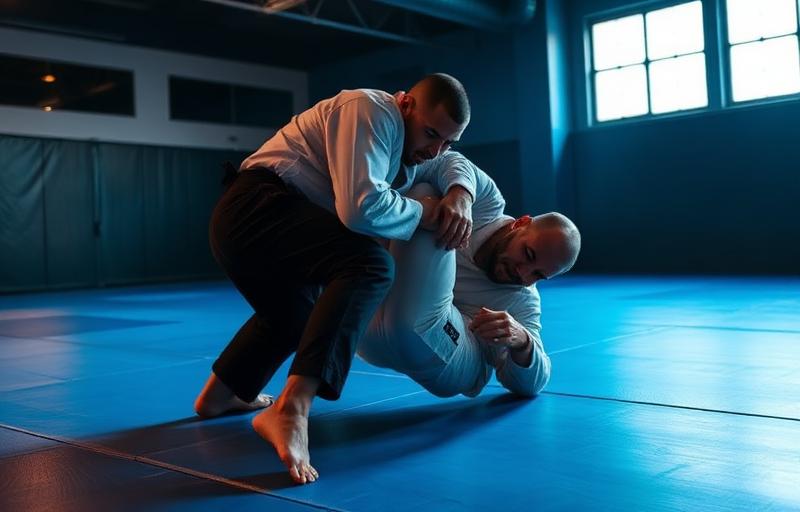
Guard Passing Fundamentals: 5 Concepts That Work at Every Belt Level
Ask any BJJ black belt what separates good grapplers from great ones, and most will say the same thing: guard passing. It's arguably the most technically demanding aspect of jiu-jitsu — you're trying to navigate past someone's most powerful weapons (their legs) while they have every mechanical advantage. Here are five concepts that will transform your passing game.
Concept 1: Posture Before Movement
The number one mistake beginners make is trying to pass before establishing posture. If your posture is broken — your head is down, your base is narrow, your weight is forward — every guard player in the gym will sweep or submit you before you even start passing.
What good posture looks like: Head up, chest lifted, hips loaded (weight on your knees, not your hands), grips established. In the gi, grip the pants at the knee line. No-gi, use hand-on-knee or hip control. Your arms should be frames, not posts.
Before you even think about passing, spend 5 seconds establishing your posture. Strip their grips, settle your base, and breathe. This alone will eliminate 50% of the submissions and sweeps you're currently getting caught in.
Concept 2: Kill the Hips
The guard player's power comes from their hip movement. Every sweep, every guard retention, every submission setup requires them to move their hips freely. Your job is to take that away.
How to kill the hips: Use your hands, forearms, or shoulders to pin one or both of their hips to the mat. The cross-face (shoulder pressure on their jaw, turning their face away from you) is the single most important guard passing technique because it prevents hip rotation. If they can't turn toward you, they can't retain guard.
Think of it as a hierarchy: control their hips → flatten them out → pass. Skip step one and step three becomes nearly impossible against a good guard player.
Concept 3: Choose Pressure or Speed (Not Both)
There are fundamentally two ways to pass guard: go through (pressure) or go around (speed). Trying to do both simultaneously usually means you do neither well.
Pressure passing means getting low, heavy, and grinding through their guard. Think knee cut, over-under pass, and stack pass. You're using weight distribution and frames to make their guard uncomfortable to maintain. Pressure passing is exhausting for the bottom player and works exceptionally well against flexible guard players.
Speed passing means staying light on your feet, creating angles, and circling past their legs before they can recompose. Think toreando (bullfighter pass), leg drag, and long step. Speed passing is effective against heavy, pressure-based guard players who rely on grips and hooks.
Develop both arsenals, then choose your strategy based on your opponent. Heavy, stiff opponent? Speed pass. Fast, flexible opponent? Pressure pass.
Concept 4: Headquarters Position
Headquarters is the position where you have one knee between their legs and one knee outside, with solid grips and good posture. It's not a guard pass — it's the launch pad for every guard pass.
From headquarters, you can go left (knee cut), go right (leg drag), stack forward, backstep to leg locks, or reset to standing. It gives you maximum optionality and forces the guard player to react to your choices rather than imposing their game.
Drill this position obsessively. Start in headquarters, choose a pass direction, and if it fails, return to headquarters instead of scrambling wildly. This one change will make your passing feel systematic rather than chaotic.
Concept 5: Complete the Pass
Half of all failed guard passes happen after the legs are cleared. You pass the guard, arrive in side control, and the guard player immediately reguards because you didn't consolidate the position.
Completing the pass means:
- Establishing a cross-face or underhook immediately upon arriving in side control
- Getting your hips to the mat (don't float above them)
- Blocking their near-side hip with your knee or shin
- Switching your hips to face them (don't stay square)
The pass isn't over when your legs are free — it's over when you've held the position for 3 seconds with proper controls. In competition, you don't get points until the referee sees stabilization. Train with the same standard.
Putting It All Together
A guard passing sequence should look like this: Establish posture → Grip and control → Choose pressure or speed → Move through headquarters → Clear the legs → Consolidate with cross-face and hip control. Drill each step individually, then chain them together. Within 3-6 months of focused practice, your passing will be unrecognizable.
Stay in the Ring
Get training tips, gear guides, and exclusive deals straight to your inbox.