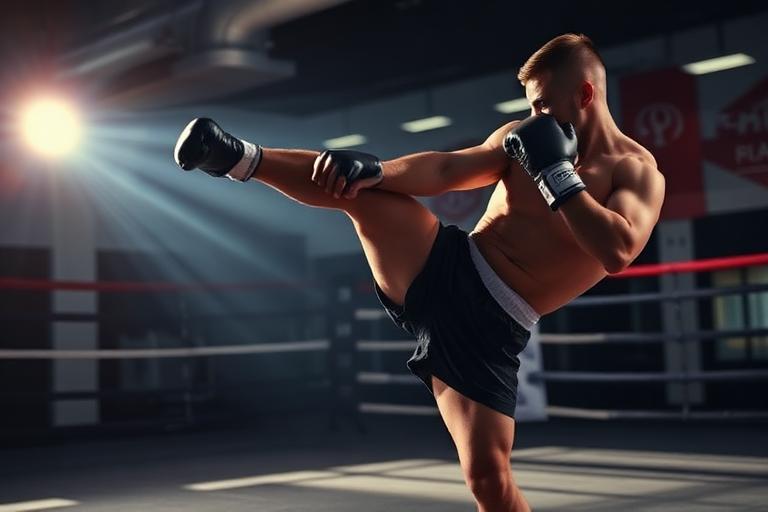
Kickboxing vs Muay Thai: What's the Difference and Which Should You Train?
Kickboxing and Muay Thai are the two most popular stand-up striking arts in the world. They share a common DNA — both use punches and kicks — but the rulesets, techniques, and cultural contexts create fundamentally different fighting styles. This guide breaks down the real differences so you can choose the right art for your goals.
The Core Difference: Eight Limbs vs Four
Muay Thai is called "the art of eight limbs" because it uses punches, kicks, elbows, and knees. Kickboxing (in its most common forms — K-1, Glory, American kickboxing) primarily uses punches and kicks, with elbows and knees restricted or banned depending on the organisation.
This single difference changes everything about how the two arts are fought, trained, and strategised.
Rules Comparison
Muay Thai Rules
- Elbows allowed (some promotions ban them or require elbow pads)
- Knees allowed, including in the clinch
- Clinching is a major part of the sport — fighters can hold, trip, knee, and elbow from the clinch
- Leg kicks are scored highly
- Sweeps and dumps from the clinch are legal and scored
- Fights are 5 rounds of 3 minutes
- Scoring favours kicks, knees, and elbows over punches
Kickboxing Rules (K-1 / Glory Style)
- Elbows are banned
- Knees are allowed but clinching is limited — the referee breaks the clinch after one strike
- No prolonged holding, no sweeps, no dumps
- Leg kicks are allowed but punches score more heavily
- Fights are 3 rounds of 3 minutes (championship fights may be 5 rounds)
- Scoring favours clean, effective striking — knockdowns are heavily weighted
Technique Differences
Stance
Muay Thai uses a taller, more square stance with the weight distributed roughly 50/50 or slightly back-weighted. This makes it easier to check leg kicks and throw knees and teeps. The guard is high with both hands protecting the face, elbows tucked to block body kicks.
Kickboxing uses a more bladed, boxing-influenced stance. The feet are slightly narrower, and fighters tend to sit lower with more weight on the front foot for punching power. Head movement (slipping, bobbing, weaving) is more prevalent because there's no clinch or elbow threat to punish it.
Punching
Kickboxing has more sophisticated boxing. Combinations are longer, head movement is more active, and fighters routinely throw 4-6 punch combinations. The limited clinch rule means fighters can stay at punching range without being pulled into a knee-and-elbow war.
Muay Thai punching is more conservative. Fighters typically throw 1-2 punch combinations to set up kicks or clinch entries. Overcommitting to punches in Muay Thai is dangerous because an extended arm is an invitation for a clinch entry or elbow counter.
Kicking
Both arts throw roundhouse kicks, but the mechanics differ. The Muay Thai roundhouse is thrown with the hips fully rotated and the shin as the primary striking surface. The kick is a committed, powerful weapon designed to damage the opponent's legs, body, or head.
Kickboxing roundhouse kicks can be thrown with a snap (chambering the knee and extending) or with the Thai-style rotation. Many kickboxers blend both methods depending on range and intent. Spinning back kicks and spinning heel kicks are more common in kickboxing than in traditional Muay Thai.
The Clinch
This is the biggest tactical difference. In Muay Thai, the clinch is a dominant position where fighters throw devastating knees, off-balance opponents with sweeps, and score with short elbows. The best Muay Thai fighters often win fights primarily through clinch work.
In kickboxing, the clinch is broken by the referee after one technique. This eliminates an entire dimension of fighting and keeps the action at kicking and punching range.
Gear Differences
Training gear is nearly identical: boxing gloves, hand wraps, shin guards, and a mouthguard. The main difference is that Muay Thai fighters train with elbow pads for sparring (to allow elbow techniques safely) and use Thai pads (which are larger and angled for kicks and knees) rather than standard focus mitts.
Muay Thai shorts have a wider leg opening and shorter inseam than kickboxing shorts, accommodating the higher kicks and clinch knees that are central to the art.
Fitness Benefits
Both arts provide exceptional cardiovascular conditioning, leg strength, and core development. Muay Thai's clinch work adds upper body and grip strength that kickboxing doesn't develop as much. Kickboxing's longer punching combinations develop shoulder endurance and hand speed.
For pure calorie burn, they're roughly equivalent — a hard hour of either art burns 600-900 calories.
Which Should You Choose?
- Choose Muay Thai if: You want the most complete stand-up striking art, you're interested in clinch fighting, or you plan to transition to MMA (the clinch transfers directly).
- Choose kickboxing if: You want faster-paced action, better boxing skills, or you prefer a sport without elbows and extended clinching.
- Choose both if: Many fighters cross-train. The skills complement each other — Muay Thai adds elbows, knees, and clinch; kickboxing adds boxing finesse and head movement.
Stay in the Ring
Get training tips, gear guides, and exclusive deals straight to your inbox.