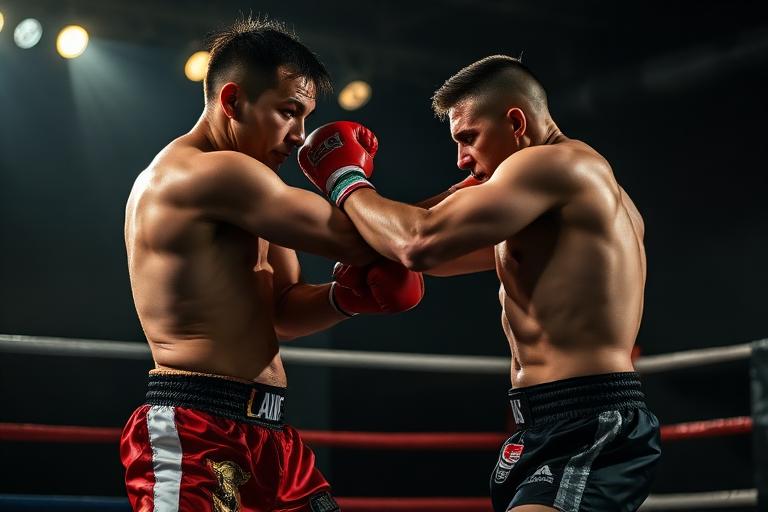
Muay Thai Clinch Techniques for Beginners: Dominate the Inside
The clinch is arguably the most important aspect of Muay Thai that separates it from other striking arts. It's where knees, elbows, sweeps, and throws happen at close range. Here's your beginner's guide to clinch fighting.
What Is the Clinch?
The clinch is a standing grappling position where fighters grab each other — typically around the head, neck, or body — to control their opponent and deliver strikes from close range. In Muay Thai, the clinch is not just tolerated — it's encouraged and scored heavily.
The Plum Position
The plum (or double collar tie) is the dominant clinch position. Both hands grip behind your opponent's head, fingers interlocked, forearms pressing against their collarbones. Pull their head down while driving your hips forward. From here, you can deliver devastating knees to the body and head.
How to Get the Plum
Swim your hands inside your opponent's grip. One hand goes behind their head, then the other follows quickly. Lock your fingers together and squeeze your elbows tight — don't let them swim back inside. Once you have the plum, immediately start pulling their head down and delivering knees.
Inside vs. Outside Position
Inside position means your arms are inside your opponent's arms, closer to their body. This is the dominant position — you have more control and can more easily get the plum. Outside position means your arms are on the outside. You have less control but can work for body locks and trips.
Basic Clinch Techniques
Single Collar Tie
One hand grips behind the opponent's head while the other hand controls their bicep. From here, you can pull their head into knees, push them off balance, or transition to the plum.
Straight Knees
From any clinch position, drive your knee straight up into your opponent's midsection. Pull their body down as you drive the knee up — the two forces meeting creates devastating impact.
Curve Knees
Instead of going straight up, bring your knee around in a slight arc to target the sides of the body (floating ribs). These are harder to see coming and extremely painful.
The Sweep (Dump)
From the plum, turn your body sharply while pulling your opponent in the direction they're already leaning. Their weight shifts past their base and they fall. Sweeps score heavily in Muay Thai competition.
Clinch Defense
- Frame: Keep your forearms against their chest to create space and prevent them from pulling you in
- Swim: Work your hands inside their grip to gain inside position
- Push and exit: Push them away and step back to reset at striking range
- Off-balance: Rather than fighting for position, push them past their base to create an opening to exit
Clinch Training Tips
Start slow with a cooperative partner. Focus on hand position and balance before adding knees. Clinch sparring (called "clinch rounds") should be a regular part of your Muay Thai training — at least 2–3 rounds per session.
The clinch is exhausting. Your grip, neck, and core will be tested like never before. But mastering it gives you a massive advantage over fighters who only know how to strike at range. Embrace the grind — the clinch is where fights are won.
Stay in the Ring
Get training tips, gear guides, and exclusive deals straight to your inbox.