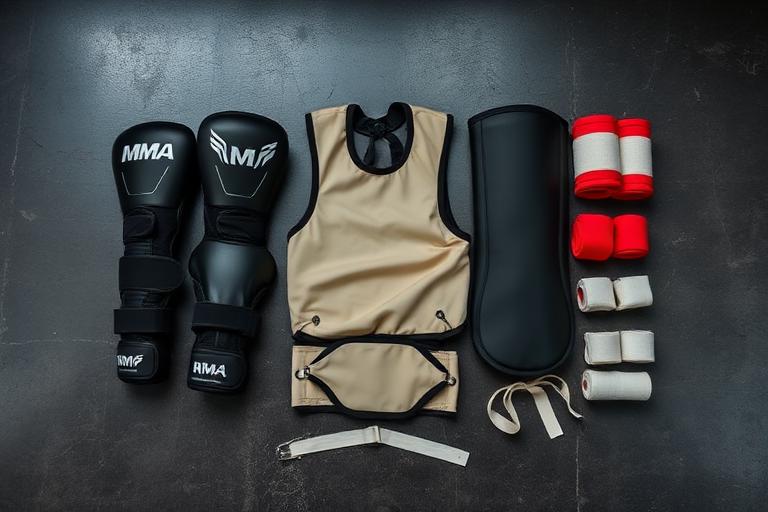
Best MMA Gloves: How to Choose for Training, Sparring, and Competition
MMA gloves are fundamentally different from boxing gloves. The open-finger design allows grappling transitions — grabbing, clinching, and submitting — while still providing enough padding to throw strikes. But "MMA gloves" is a broad category that covers everything from 4oz competition gloves to 7oz sparring models to bag-specific training gloves. Choosing the wrong type for your training puts your hands and your partners at risk.
Types of MMA Gloves
Competition Gloves (4oz)
The lightest option, used in professional and amateur MMA fights. Minimal padding covers only the knuckles, allowing maximum hand dexterity for grappling. The thin padding means strikes hit harder — which is why these are never appropriate for training or sparring.
Only buy these if: You have a sanctioned fight coming up and need to train in competition-weight gloves for the final 1-2 weeks of camp.
Sparring Gloves (6-7oz)
The best all-around MMA glove. 6-7oz models provide enough padding to spar safely while keeping the open-finger design for grappling transitions. Most gyms require 7oz for MMA sparring. The extra padding compared to competition gloves makes a meaningful difference in protection for both you and your partner.
Best for: MMA sparring, partner drills, technical training.
Training/Bag Gloves (4-6oz)
Designed specifically for heavy bag and pad work. These have more knuckle padding than competition gloves but keep the same open-finger design. Some models include wrist wraps or additional wrist support. They're not suitable for sparring because the padding isn't distributed for partner safety — it's concentrated on the knuckles for your protection against impact.
Best for: Heavy bag work, pad drills, solo training.
Hybrid/Grappling Gloves
Minimal-padding gloves designed primarily for grappling with light striking. These are popular in Combat JJ (which allows open-palm strikes) and for drills that combine ground work with stand-up transitions. Minimal knuckle protection means they're not suitable for any serious striking work.
Construction Details
Padding
Multi-layer foam (soft inner, dense outer) provides the best protection-to-weight ratio. Some premium gloves use injection-moulded foam that maintains its shape and density over thousands of impacts. Cheaper gloves use single-density foam that compresses permanently, losing protection within months.
Thumb Position
The thumb should be attached to the main body of the glove with a connecting panel. Free-floating thumbs (common on cheaper models) can catch on cage mesh, shorts, or training partners, leading to thumb sprains and dislocations. An attached thumb also prevents eye pokes — which is increasingly required by competition rules.
Closure System
Velcro: Easiest to put on and take off. Standard for training. Multiple straps provide better wrist support than single-strap designs.
Lace-up: Provides the tightest, most secure fit but requires a partner to put on. Standard for competition. Some training gloves offer a hybrid with a zipper under a Velcro strap.
Sizing
MMA gloves are sized by hand circumference (measured around the knuckles, excluding thumb):
- Small: 6.5-7.5" (typically under 145 lbs)
- Medium: 7.5-8.5" (145-175 lbs)
- Large: 8.5-9.5" (175-205 lbs)
- XL: 9.5"+ (205+ lbs)
With hand wraps on, you may need to size up. Try gloves with your usual wrapping to ensure a comfortable fit that doesn't restrict blood flow.
Care
Wipe MMA gloves inside and out with anti-bacterial spray after every session. The open-finger design means more sweat enters the padding than with boxing gloves. Air dry completely — stuff newspaper inside to absorb moisture and maintain shape. Never machine wash; the agitation destroys padding adhesive and closure systems.
Stay in the Ring
Get training tips, gear guides, and exclusive deals straight to your inbox.