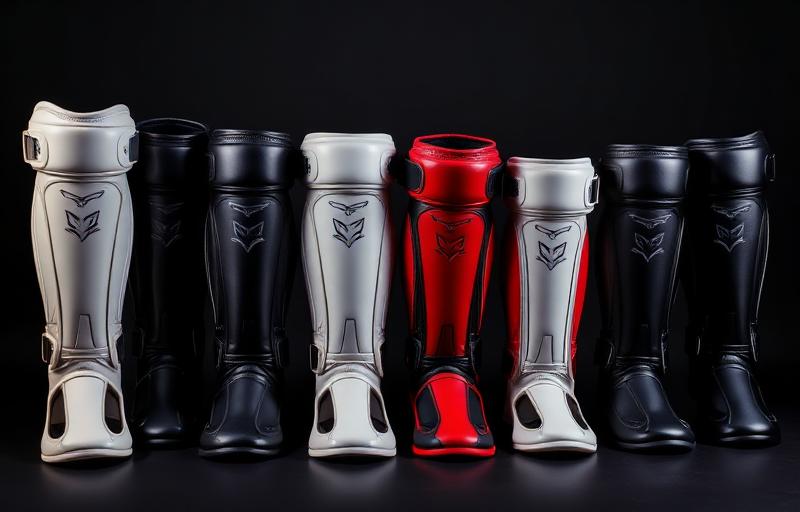
Best Muay Thai Shin Guards: A Complete Buyer's Guide for Every Level
In Muay Thai, your shins are both weapons and targets. Every checked kick, every leg block, and every accidental shin-on-shin collision sends shockwaves through the tibial bone. Good shin guards absorb that impact so you can train hard without accumulating microfractures, bone bruises, and chronic pain. Here's how to evaluate and choose the right pair.
Types of Shin Guards
Sleeve-Style (Pull-On)
Sleeve-style shin guards slide over the foot and up the leg like a sock. They're lightweight, stay in place without straps, and feel the most natural during kicking. The downside is that they offer less padding than strap-on models and can be difficult to put on over sweaty legs mid-session.
Best for: Experienced fighters who want minimal bulk and maximum mobility. Not recommended for heavy sparring due to lower padding density.
Strap-On (Velcro Closure)
The most common type for Muay Thai. These have one or two Velcro straps at the back of the calf, sometimes with an additional strap at the ankle. They're easy to put on and take off, adjustable for different leg sizes, and typically offer the most padding.
Best for: All-around training and sparring. The standard choice for most Muay Thai practitioners.
Hybrid (Instep + Shin)
Hybrid models combine a shin guard with a separate instep protector connected by a strap under the foot. This provides the most complete coverage — protecting both the shin and the top of the foot — which is critical for Muay Thai where roundhouse kicks land with the lower shin and instep.
Best for: Anyone who throws a lot of kicks. The instep protection prevents foot injuries when kicks connect with elbows, knees, or the point of the hip.
Materials
Foam Density
The padding inside the guard determines how much impact it absorbs. Multi-layer foam (combining soft inner foam with dense outer foam) is the gold standard. The soft layer conforms to your shin for comfort; the dense layer disperses impact force.
Single-density foam guards are cheaper but offer less protection. If you can press the padding flat with your thumb, it won't do much against a hard check.
Outer Shell
Genuine leather is the most durable and develops a natural patina over time. It moulds to your leg after a few sessions and lasts 2-3 years of heavy use. The downside is cost and weight.
Synthetic leather (PU) is lighter, cheaper, and easier to clean. Modern PU is remarkably durable — most training shin guards use it. It doesn't develop the same character as real leather but performs nearly as well.
Neoprene is used in sleeve-style guards. It's stretchy and breathable but offers the least impact protection.
Sizing
Shin guards should cover from just below the knee to the ankle bone. Too short and your lower shin is exposed; too long and the guard pushes into your knee when you bend your leg.
General sizing based on height:
- Small: Under 5'5" / 165cm
- Medium: 5'5" - 5'9" / 165-175cm
- Large: 5'9" - 6'1" / 175-185cm
- XL: Over 6'1" / 185cm
These are guidelines — leg length varies independently of height. When possible, try on shin guards and check that the top of the guard sits 1-2 inches below the knee cap and the bottom covers the ankle bone.
What to Look For
- Full instep coverage. Muay Thai kicks land with the lower shin and instep. Guards without foot coverage leave you vulnerable to the most common foot injuries in the sport.
- Secure fit. The guard should not rotate around your leg when you kick. Wide Velcro straps with elastic reinforcement provide the best hold. If you're between sizes, go smaller — a loose guard is worse than no guard.
- Contoured shape. Flat guards create pressure points on the shin bone. Anatomically curved guards distribute weight across the calf muscles and sit flush against the leg.
- Breathability. Perforated inner lining or moisture-wicking fabric keeps your legs cooler and reduces slipping from sweat.
Maintenance
Wipe down your shin guards with an anti-bacterial spray or wipe after every session. Do not machine wash leather or PU guards — the agitation breaks down the bonding adhesive. Air dry completely before storing; stuffing newspaper inside absorbs moisture and helps them hold their shape.
Replace your shin guards when the foam no longer springs back after compression, the Velcro stops holding, or the outer shell is cracked and peeling. Most training guards last 12-18 months of 4+ sessions per week.
Stay in the Ring
Get training tips, gear guides, and exclusive deals straight to your inbox.