Common Boxing Injuries and How to Prevent Them
Boxing is a contact sport — injuries happen. But the vast majority of common boxing injuries are preventable with proper technique, quality gear, and smart training habits. Here's what to watch for and how to protect yourself.
Hand and Wrist Injuries
The most common injuries in boxing. Your hands weren't designed to repeatedly strike hard objects at high speed.
Boxer's Fracture
A break in the metacarpal bones (the long bones between your wrist and knuckles). Usually caused by punching with incorrect fist alignment — hitting with the pinky-side knuckles instead of the first two knuckles.
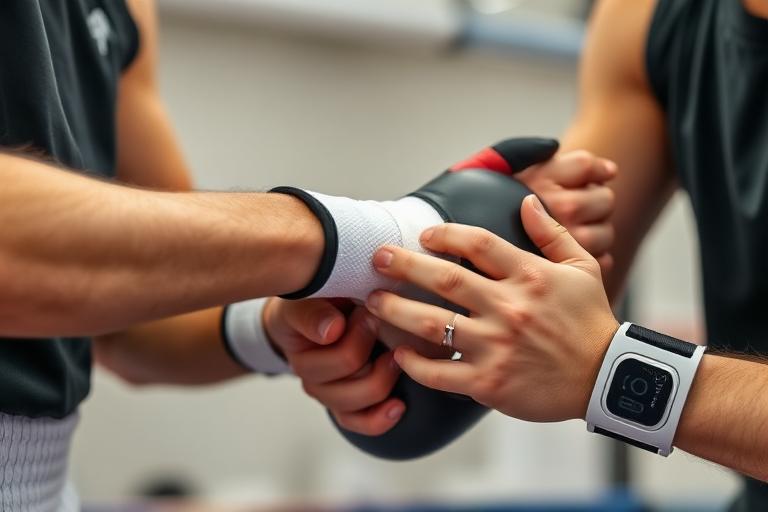
Prevention: Always use hand wraps. Focus on proper fist formation — the first two knuckles should make contact. Invest in quality gloves with adequate padding.
Wrist Sprains
Caused by the wrist bending on impact. If your wrist isn't properly stabilized, the force of a punch can hyperextend or laterally flex the joint.
Prevention: Tight hand wraps that stabilize the wrist joint. Gloves with firm wrist support (velcro closure). Strengthen your wrists with wrist curls and grip exercises.
Shoulder Injuries
Rotator Cuff Strain
Repetitive punching — especially hooks and uppercuts — stresses the rotator cuff muscles. Symptoms include pain when lifting your arm overhead or a dull ache in the shoulder after training.
Prevention: Warm up your shoulders thoroughly before training. Include rotator cuff strengthening exercises (external rotations with a band) in your routine. Don't overtrain — if your shoulders are consistently sore, reduce volume.
Nose and Facial Injuries
Broken noses, cut eyebrows, and swollen cheekbones are occupational hazards of sparring.
Prevention: Wear proper headgear during sparring. Develop your defensive skills — slips, parries, and shoulder rolls. Spar with controlled partners who aren't trying to take your head off.
Concussions
The most serious concern in boxing. Repeated subconcussive blows (even ones that don't cause obvious symptoms) can accumulate over time.
Prevention: Limit hard sparring to once per week maximum. Use 16oz gloves and headgear. Learn to roll with punches rather than absorbing them. If you feel dizzy, see stars, or have a headache after sparring — stop immediately and rest. Take at least 2 weeks off after any suspected concussion.
Shin Splints
Pain along the front of the lower leg from repetitive footwork on hard surfaces.
Prevention: Train on proper surfaces (sprung floors or mats, not concrete). Wear supportive shoes. Strengthen calves and tibialis anterior muscles. Ice after training if you feel any shin tenderness.
General Prevention Strategy
- Warm up: 10 minutes minimum before every session
- Use quality gear: Don't cheap out on gloves, wraps, and protective equipment
- Listen to your body: Pain is a signal. Training through sharp pain leads to serious injury.
- Rest and recover: Take at least 1-2 rest days per week. Sleep 7-9 hours.
- Strengthen weak points: Wrist curls, shoulder rotator cuff work, and neck strengthening exercises should be part of every boxer's routine.
Smart training means long-term training. Take care of your body and you'll be able to train for decades instead of months.
Stay in the Ring
Get training tips, gear guides, and exclusive deals straight to your inbox.