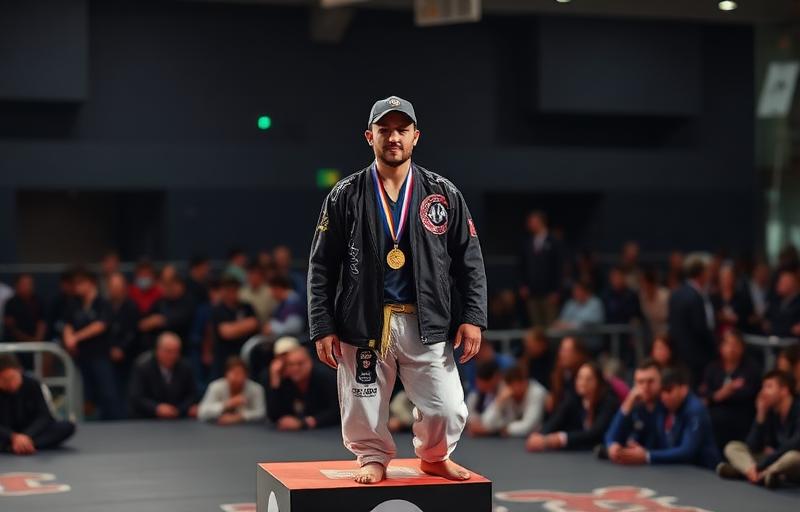
Your First BJJ Competition: A Complete Preparation Guide
Your first BJJ competition will be one of the most intense, terrifying, and ultimately rewarding experiences in your martial arts journey. The adrenaline, the crowd, the pressure — nothing in training fully prepares you for it. But with the right preparation, you can walk onto the mat confident and ready. Here's everything you need to know.
When Are You Ready to Compete?
There's no perfect time, but a general guideline is 6 months of consistent training (3-4 times per week) for your first competition. You should know basic escapes from mount, side control, and back control. You should have at least 2-3 submissions you can reliably hit during rolling. And you should be comfortable being in uncomfortable positions without panicking.
That said, many coaches encourage competing even earlier — at 3-4 months — because the experience itself accelerates your development more than months of additional classes. You'll learn more about yourself in one 5-minute competition match than in ten casual rolls.
Choosing Your First Tournament
Start local and small. Look for tournaments in your city or region with a good reputation for organization and safety. IBJJF events are well-run but expensive ($100+ registration). NAGA, Grappling Industries, and local events are more affordable and beginner-friendly.
Check the rule set before registering. Gi or no-gi? Points or submission only? Are heel hooks legal in your division? Understanding the rules prevents surprises on competition day.
Register for the correct weight class (weigh-in is usually the morning of) and experience division (most events have "beginner" or "novice" categories for competitors with less than 2 years of training).
The 8-Week Training Camp
Weeks 8-5: Build your A-game. Identify 2-3 techniques for each major position: a guard pull or takedown, a sweep from bottom, a guard pass, and 2 submissions. Drill these relentlessly. Don't try to learn new techniques — sharpen what already works.
Weeks 4-3: Increase sparring intensity. Roll with a timer matching competition round lengths (usually 5-6 minutes for white belts). Start rounds from specific positions. Practice your game plan against different body types.
Weeks 2-1: Taper. Reduce training volume but maintain intensity. Focus on rest, recovery, and mental preparation. Visualize your matches. Stop learning new moves — trust what you've drilled.
Competition week: Light technical drilling only. No hard rolling. Focus on sleep, hydration, and nutrition. Do a practice weigh-in to confirm your weight.
Weight Management
For your first competition, do not cut weight. Compete at whatever weight you naturally walk around at. Weight cutting is a skill that requires experience, and the stress of your first competition is enough without adding dehydration and food restriction.
Weigh in wearing your gi (for gi divisions — the gi adds approximately 3-4 lbs). Factor this into your weight class selection. If you're 165 lbs and your gi weighs 4 lbs, you'll weigh in at 169 lbs — so you'd compete at the 175 lb or medium-heavy division.
Game Planning
Your game plan should answer these questions:
- How does the match start? Will you pull guard or shoot for a takedown? Have a clear first move.
- What's your Plan A from top? Your best guard pass → your best position → your best submission.
- What's your Plan A from bottom? Your best guard → your best sweep → your best submission.
- What if Plan A fails? Have one backup option from each position.
Keep it simple. You're not trying to reinvent jiu-jitsu — you're executing a few techniques you've drilled thousands of times under maximum stress.
Competition Day Logistics
Pack the night before: Gi (check for IBJJF compliance if applicable), belt, rash guard, backup shorts, flip flops/sandals, water bottle, light snacks (bananas, rice cakes, energy bars), your ID, your registration confirmation, nail clippers, athletic tape, and a positive attitude.
Arrive early — at least 1 hour before your division. Check in, verify your bracket, and find your competition mat. Do a light warm-up: jumping jacks, hip escapes on the wall, light shadow rolling with a teammate.
Between matches: Stay warm. Don't sit down and cool off completely. Sip water, eat something small if you have more than 30 minutes between matches. Stay off your phone — stay present and focused.
Managing Competition Nerves
Everyone is nervous before their first competition. The adrenaline dump is real — your heart rate will spike, your mouth will go dry, and you might feel shaky. This is completely normal and happens to world champions too.
Breathing is your best tool. Box breathing (4 seconds in, 4 hold, 4 out, 4 hold) activates your parasympathetic nervous system. Do this while waiting for your match. Focus on your breathing rather than the outcome.
Reframe nerves as excitement. The physiological response is identical — your brain just labels it differently. Tell yourself "I'm excited" instead of "I'm scared." It sounds simple, but research shows it genuinely improves performance.
After the Competition
Win or lose, your first competition is a milestone. Take a day or two to rest, then review your matches (have a teammate film them). Note what worked, what didn't, and what you want to improve. This feedback loop is where the real growth happens.
Most importantly: compete again. The first one is the hardest. The second one is where you start actually executing your game plan instead of surviving an adrenaline dump. Sign up for another tournament within 2-3 months while the experience is fresh.
Stay in the Ring
Get training tips, gear guides, and exclusive deals straight to your inbox.