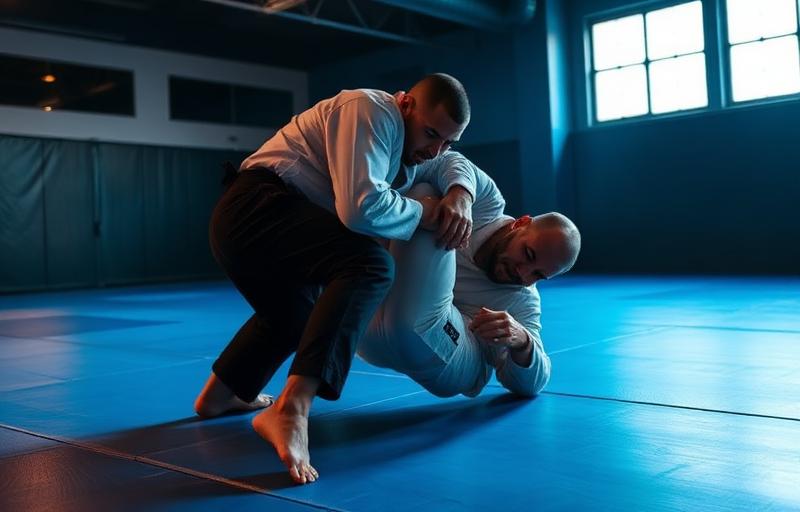
BJJ for Older Adults: A Safe and Practical Guide to Starting Jiu-Jitsu After 40
There's a persistent myth that BJJ is a young person's sport. It's not. Jiu-jitsu is built on leverage, timing, and technique — attributes that improve with practice, not peak at 25. Plenty of practitioners start in their 40s, 50s, and beyond, earning black belts and competing at the masters level. But training smart is non-negotiable when your recovery isn't what it was at 20. This guide is for anyone starting BJJ later in life.
Choosing the Right Academy
Not every gym is suitable for older beginners. Look for these indicators:
- Structured fundamentals program. Gyms that throw beginners directly into open mat with experienced blue and purple belts create an injury-prone environment. A separate beginner class with progressive curriculum is ideal.
- Controlled rolling culture. Watch a class before joining. If every roll looks like a competition match — explosive takedowns, neck cranks, slam-style guard passes — find a different gym. You want a culture where training partners adjust intensity to each other's level.
- Instructor attention. Smaller class sizes mean the instructor can monitor you more closely and intervene before bad positions become injuries. Classes over 30 students often lack this oversight.
- No-pressure competition culture. You should never feel obligated to compete. Competition is great for those who want it, but training for health and enjoyment is equally valid at any age.
Managing Recovery
The biggest difference between training at 25 and 45 isn't strength or flexibility — it's recovery time. Joints take longer to settle after hard sessions, muscle soreness persists an extra day or two, and sleep disruption has a bigger impact on performance.
Practical recovery strategies:
- Train 2-3 times per week, not 5-6. More isn't better if you're constantly sore and accumulating joint inflammation. Two quality sessions with full recovery beat five sessions at 60% capacity.
- Prioritise sleep. Growth hormone — critical for connective tissue repair — is released primarily during deep sleep. 7-8 hours minimum. If BJJ is disrupting your sleep (adrenaline, late classes), train earlier in the day.
- Cold exposure and heat. 10 minutes in an ice bath or cold shower after training reduces inflammation. Sauna (15-20 minutes) improves blood flow and promotes recovery. Alternating the two is a common protocol among masters competitors.
- Supplement strategically. Collagen peptides (10-15g daily) support tendon and cartilage health. Omega-3 fatty acids reduce systemic inflammation. Magnesium helps with muscle relaxation and sleep quality. These aren't magic — they support a solid training and nutrition foundation.
Adapting Your Game
You don't need to play the same game as a 22-year-old athletic purple belt. As an older grappler, build your game around:
- Frames and structure over speed. Strong frames (forearm across the neck, knee-elbow connection) create defensive barriers that don't require athletic explosiveness. This is the foundation of an "old man game" that works for decades.
- Top pressure and half guard. Being on top reduces the load on your spine and knees. Half guard (top or bottom) is a mature position that rewards patience and technique over athleticism.
- Avoiding deep stacking. Guard positions that require you to be folded in half (inverted guard, deep half under a heavy passer) compress the cervical spine aggressively. Favour butterfly guard, seated guard, and single-leg X instead.
- Gi-based techniques. Gi grips slow the pace down and reduce explosive scrambles. Many older grapplers prefer gi training because the handles create control without requiring speed.
Common Concerns Addressed
"I'm not flexible enough"
You don't need to do the splits. BJJ flexibility develops naturally over months of hip escapes, guard retention, and warm-up drills. Start where you are — mobility improves with consistent training faster than you'd expect.
"I'll get hurt"
Injury risk is real but manageable. The biggest risk factors are ego (going too hard), bad training partners (uncontrolled beginners), and ignoring pain signals. Choose your gym carefully, communicate openly with partners, and tap early and often. A tapped ego heals instantly; a torn meniscus does not.
"I'm too out of shape"
BJJ will get you in shape — that's the whole point. You'll be exhausted after your first class regardless of your fitness level. The cardio demands of grappling are unique (constant isometric tension plus bursts of explosive movement), and the only way to build them is to train. Start with what you have.
What to Expect in Your First Year
You will tap constantly. This is normal at every age. The first 6 months of BJJ are about survival — learning to breathe under pressure, recognising when you're in danger, and understanding basic positions. Progress feels slow until suddenly it doesn't. By month 8-12, you'll start catching newer students and executing techniques under pressure.
Most importantly, BJJ at 40+ is about the long game. You're not training for the UFC — you're training for a healthier body, a sharper mind, and a community that keeps you accountable. The best time to start was 20 years ago. The second best time is today.
Stay in the Ring
Get training tips, gear guides, and exclusive deals straight to your inbox.