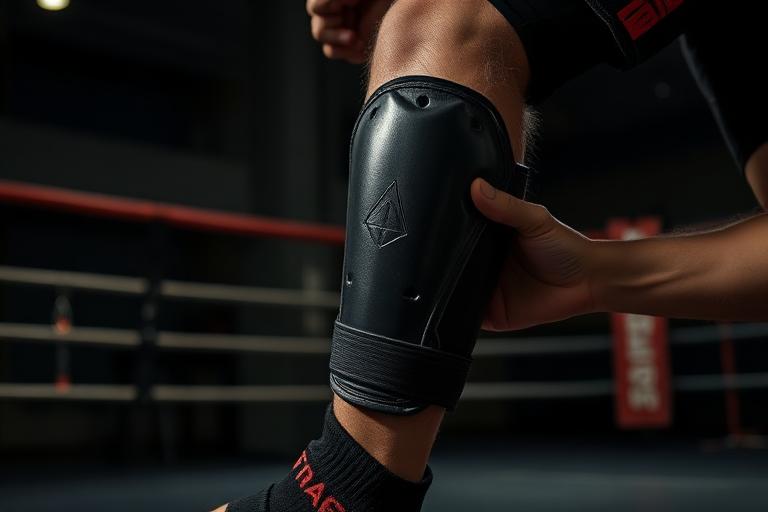
Muay Thai Training at Home: Equipment, Drills, and Workout Plans
You don't need a partner, pads, or a full-size ring to train Muay Thai effectively. Home training has been a staple of Thai boxing for generations — fighters in Thailand shadow box, skip rope, and do bodyweight conditioning outside the gym constantly. With minimal equipment and the right drills, you can develop technique, power, and fight-ready cardio from your living room or garage.
Essential Home Equipment
Tier 1: No Equipment Needed
Shadow boxing, footwork drills, and bodyweight conditioning require nothing but space. A 6x6-foot area is enough for shadow boxing. These drills develop technique, coordination, and muscle memory without any investment.
Tier 2: Under $100
- Jump rope ($10-$20): The foundation of Muay Thai conditioning. Thai fighters skip rope for 20-30 minutes before every session. A weighted speed rope builds calf endurance and footwork rhythm.
- Hand wraps ($10-$15): Even for shadow boxing, wrapping your hands reinforces proper fist formation and wrist alignment.
- Resistance bands ($15-$25): Attach to a door anchor for simulated clinch pulls, knee drives, and teep resistance. Bands also work for shoulder conditioning and hip mobility.
- Yoga mat ($15-$25): For stretching and floor conditioning work. Thai fighters are surprisingly flexible — hip and hamstring mobility directly improves kick height and clinch effectiveness.
Tier 3: Under $500
- Heavy bag ($100-$300): A 100-150 lb heavy bag is the single best home training investment. It lets you practice kicks, knees, elbows, and combinations with real impact. Ceiling-mounted bags are the most stable; freestanding bags wobble too much for heavy kicks.
- Boxing gloves ($60-$120): For bag work. Use the same gloves you train in at the gym so your hand positioning transfers directly.
- Timer app (free): Set 3-minute rounds with 30-second rest to simulate training conditions. Every drill should be done in rounds, not open-ended.
Solo Drills
Shadow Boxing (20 minutes)
Shadow boxing is the most underrated training method in Muay Thai. It builds technique, footwork, and ring awareness without any impact on your joints. Structure your shadow boxing in 3-minute rounds:
- Round 1-2: Hands only. Jab, cross, hook, uppercut. Focus on returning to guard after every combination.
- Round 3-4: Add kicks. Jab-cross-low kick, jab-roundhouse, switch kick. Emphasise hip rotation and returning to stance after every kick.
- Round 5-6: Full Muay Thai. Add knees, elbows, teeps, and clinch entries. Visualise an opponent — don't just throw strikes into the air. React to imaginary attacks, slip, block, and counter.
Heavy Bag Work (20 minutes)
If you have a bag, structure your rounds by weapon:
- Rounds 1-2: Boxing combinations on the bag. Focus on power, hip rotation, and punching through the target.
- Rounds 3-4: Kicks only. Roundhouse kicks, switch kicks, teeps. Focus on shin contact (not foot) and turning the hip over completely.
- Round 5: Clinch knees. Hold the bag like a clinch partner and drive knees straight up the centre. Alternate left and right.
- Round 6: Free round. Mix everything. Throw realistic combinations as if you're fighting. Move around the bag, create angles, and finish combinations with kicks.
Conditioning Circuit (15 minutes)
Do 3 rounds of this circuit with 1 minute rest between rounds:
- Jump rope — 3 minutes
- Burpees — 10 reps
- Knees on heavy bag (or air knees) — 30 seconds per side
- Push-ups — 15 reps
- Bodyweight squats — 20 reps
- Plank — 1 minute
Weekly Schedule
For home-only training, aim for 4-5 sessions per week:
- Monday: Shadow boxing (6 rounds) + conditioning circuit
- Tuesday: Heavy bag work (6 rounds) + stretching
- Wednesday: Rest or light stretching/yoga
- Thursday: Shadow boxing (6 rounds) + clinch knee drills + conditioning
- Friday: Heavy bag work (6 rounds) + jump rope (15 minutes)
- Weekend: Active recovery — light jog, stretching, or attend a gym class if possible
Limitations of Home Training
Home training develops technique and conditioning, but it cannot replace live training with a partner. You need pad work with a coach to develop timing and accuracy. You need sparring to learn distance management and reactions under pressure. Use home training to supplement gym sessions, not replace them entirely.
Stay in the Ring
Get training tips, gear guides, and exclusive deals straight to your inbox.